
Fixing the Exceptions Problem in Returns Operations
Fixing the Exceptions Problem in Returns Operations
6 MINS READ


At Trove, we spend a lot of time with teams managing returns at scale, and we often hear the same thing: “In returns, we live our lives by exceptions.”
Everyday exceptions, from mis-matched RMAs to partial shipments and extra items, create a constant gap between system data and physical reality, and that gap is where operations start to break down. Let’s look at the most common exceptions and how to solve them at the system level.
Where returns start to break down
Returns systems are built for predictability: a return is initiated, an RMA is generated, and the warehouse processes what’s expected. In reality, that rarely holds.
Operators are constantly dealing with mismatches between system data and what’s physically in front of them. A customer uses the wrong label, splits a shipment, or sends something unexpected. The data often exists, but not in a way the system can use.
When that happens, the workflow stalls and the operator steps in: checking multiple systems, piecing together what happened, and logging issues elsewhere to resolve later.
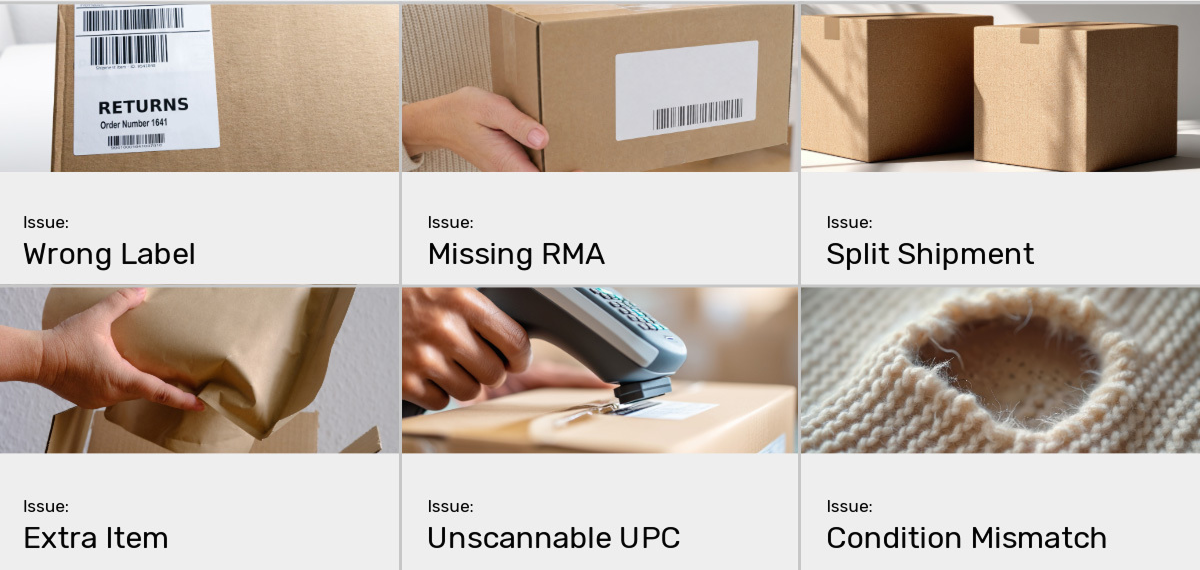
The patterns are consistent across brands, with the same issues popping up again and again:
- Missing RMA / ASN – A return arrives with no system record
- Multi-package return – Items show up across separate shipments
- Shortage – Fewer items arrive than expected
- Overage – Extra items show up unexpectedly
- Unknown or unscannable items – No clean match to the catalog
- Wrong brand or fraud cases – Items fall outside expected workflows
- Condition mismatches – Items don’t meet return criteria
The cost of operating this way
When exceptions sit outside the system, things quickly snowball. Warehouse teams spend less time moving inventory and more time reconciling issues. Processes slow down. To keep things moving, teams rely on additional tools, spreadsheets, forms, and internal messaging, which creates a fragmented view of what’s actually happening.
Eventually, refunds take longer because items can’t be processed cleanly. Inventory sits in limbo instead of being restocked or resold. All these small inefficiencies, extra touches and missed items add up to lost value.
How a Returns Management System like Trove changes the model
Exceptions will always exist, but companies that implement returns management systems can better absorb them and avoid the worst of the impact. Here’s how an RMS can support:
- Bring missing data into the system: When a return arrives without an RMA, most workflows come to a halt. With Trove, the warehouse associate can create the shipment directly, capturing the item, packaging, and tracking details. Instead of waiting for the system to catch up, the system reflects what’s already happened
- Adapt workflows in real time: A major part of handling exceptions at scale is having workflows that can adapt as conditions change. Trove’s RMS gives operators configurable, guided workflows that adjust to different product types, return conditions, and operational scenarios as items move through the warehouse.
- Configure processes without rigid rules: Teams can easily create or modify workflows through a drag-and-drop interface. Whether processing blind shipments that arrive without shipment data, routing items based on condition, or managing services like cleaning and repacking, the result is a more consistent operation that keeps inventory moving and reduces manual decision-making on the warehouse floor.
- Capture unexpected inventory: Returns rarely show up in perfect condition or sequence. Items come in separately, partially, or even with extra items. With Trove, you can create and track these items immediately. They don’t get set aside or lost in side processes. They’re brought into the same flexible workflows and handled accordingly.
- Keep systems aligned: Once an item is identified and processed, that information doesn’t stay isolated. Trove passes those updates to the systems that depend on them: WMS, partner systems, and brand platforms. The result is alignment between what’s happening in the warehouse and what’s reflected in the system.

What returns management looks like for a high-volume apparel brandFor one of Trove’s apparel partners, improving returns processing and tracking made a measurable impact across operations, from throughput to inventory recovery. The brand saw:
|
From exception handling to operational control
When exceptions live outside the system, teams spend time constantly resolving issues, managing workarounds, and trying to keep data aligned.
When they’re handled within the system, operations become more predictable. Inventory moves faster. Refunds happen sooner. The exceptions don’t go away, but the whole process becomes structured. And at scale, that structure is what turns returns from a constant source of friction into something the business can actually control.
Curious to hear more? See how Trove’s RMS helps you spend less time chasing exceptions and more time moving inventory. Learn more here.
Your Resale and Returns Questions, Answered
What is a returns exception?
A returns exception is any return that does not match the expected workflow or system record. Examples include missing RMAs, partial returns, wrong labels, extra items, fraud cases, or products that cannot be identified or scanned during processing.
What are the most common exceptions in returns operations?
Some of the most common returns exceptions include missing RMAs or ASNs, split shipments, extra items, unscannable UPCs, condition mismatches, and returns that don’t match system records. These issues create gaps between warehouse reality and system data, which slows processing and increases manual work.
How do brands typically manage returns exceptions today?
Many brands still manage exceptions through a combination of manual processes, spreadsheets, shared forms, Slack messages, and disconnected systems. This creates fragmented workflows and makes it difficult to maintain real-time visibility into returned inventory.
How does a returns management system help handle exceptions?
A returns management system (RMS) helps warehouse teams process unexpected scenarios without stopping operations. Systems like Trove allow operators to create shipments, identify items, capture tracking information, and update workflows in real time so inventory can continue moving even when return data is incomplete or incorrect.