
Why Every Returns Program Should Measure Time-to-Disposition
Why Every Returns Program Should Measure Time-to-Disposition
4 MINS READ


For many brands, the biggest opportunity to recover value happens after inventory arrives and before a final disposition decision is made. Yet while brands closely track how many items are returned, they often pay less attention to how quickly those items are put back to work.
The longer returned inventory sits waiting for its next step, the longer it remains unavailable for resale, restocking, refurbishment, or recycling.
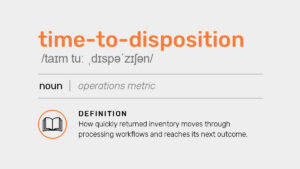
That’s why we recommend taking a closer look at time-to-disposition: a metric that measures how quickly returned inventory moves through processing workflows and reaches its next outcome. By tracking this, brands can identify bottlenecks, improve inventory recovery, and uncover opportunities to put products back into circulation faster.
Why Time-to-Disposition Matters
Every additional day inventory spends waiting for a decision has downstream consequences. Time-to-disposition provides a clearer view of how efficiently inventory moves through recovery workflows and helps brands answer critical questions:
- How long does inventory spend in processing workflows?
- Where are the biggest issues or delays occurring?
- Which product categories move efficiently and which don’t?
- How quickly are we turning returned inventory into recoverable value?
The answers often reveal opportunities to improve both operational efficiency and recovery outcomes. They can also help teams understand where labor is being spent across the returns process and whether employees are focused on high-value recovery activities or tied up in avoidable bottlenecks and manual workflows.
Four Ways to Improve Time-to-Disposition
1. Reduce Unnecessary Manual Reviews
Not every returned item needs to be evaluated from scratch. If a product consistently follows the same disposition path (for example, unopened items that are always restocked or damaged items that are always recycled), create rules that allow those decisions to happen automatically.
2. Standardize Disposition Criteria
The more exceptions a team manually evaluates, the slower inventory moves. Establish clear rules that help teams make consistent decisions and move inventory to the right outcome faster.
Start with your highest-priority recovery path:
- Tier 1: Restock eligible inventory quickly. Define clear criteria for products that can be returned to available inventory without extensive review.
- Tier 2: Route non-restock inventory consistently. For products that can’t be restocked, establish standardized rules for resale, repair, liquidation, recycling, or other channels.
Reviewing recent disposition decisions helps identify common scenarios that could be standardized, reducing manual reviews and accelerating recovery across all inventory types.
3. Create Different Processing Paths for Different Inventory
Not every returned item needs to move through the same workflow. Products with strong resale demand, seasonal relevance, or higher recovery value may warrant faster processing than lower-value inventory. Creating dedicated processing queues for these products can help ensure they don’t get delayed behind lower-priority inventory.
4. Monitor Inventory Stuck in Process
Set target turnaround times for each stage of the returns process and review exceptions weekly. Patterns in delayed inventory often reveal process gaps, staffing constraints, or decision-making bottlenecks that need attention.
The Goal Isn’t Faster Processing. It’s Faster Recovery.
Time-to-disposition isn’t just about moving products through a warehouse faster. It’s about reducing the time between a return and its next destination. The sooner products reach the right recovery channel, the sooner brands can put them back into circulation and make the most of every return.
Ready to recover more value from every return? Small improvements can make a big impact on recovery outcomes. Talk to Trove today about improving your time-to-disposition.
Your Returns Questions, Answered
1. What is time-to-disposition in returns management?
Time-to-disposition measures how long it takes returned inventory to move through processing workflows and reach its next outcome, such as restock, resale, repair, recycling, or liquidation. It helps brands understand how efficiently they are recovering value from returned products.
2. Why is time-to-disposition important for resale programs?
The longer inventory sits waiting for a disposition decision, the longer it remains unavailable for resale. Reducing time-to-disposition can help brands list products faster, improve inventory turnover, and maximize recovery opportunities.
3. How can brands reduce delays in the returns process?
Brands can improve time-to-disposition by standardizing disposition rules, automating routine decisions, prioritizing high-value inventory, and monitoring products that become stuck in processing workflows.
4. What causes inventory to get stuck in returns processing?
Common causes include manual reviews, inconsistent disposition criteria, inspection backlogs, staffing constraints, and a lack of visibility into where inventory is waiting within the returns workflow.