
Returns Inspection Strategy: Finding the Right Balance of Speed and Depth
Returns Inspection Strategy: Finding the Right Balance of Speed and Depth
5 MINS READ


Every returns operation wants to move inventory quickly. The longer a returned product sits in a facility, the longer it takes to get that inventory back into a sellable channel.
But speed alone isn’t the goal. Inspection helps determine whether a returned product can go back into stock, be repaired or resold, or move through another recovery path.
Move too quickly, and operators can miss information that affects grading, disposition, and recovery. Inspect too deeply, and you can add time and labor without improving the decision.
Finding the right balance starts with understanding your recovery options, from repair to resale, and designing inspections around them. The goal is to capture enough information to make the right decision without spending time on details that won’t change the outcome.
Three Approaches to Returns Inspection
1. Return-to-Stock
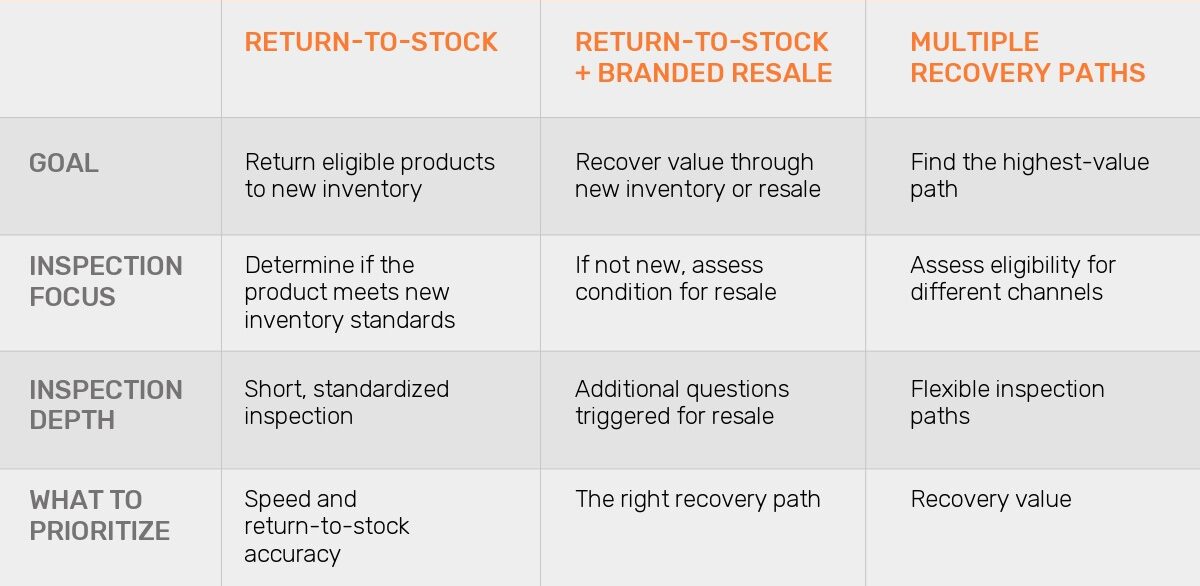
The model: The primary goal is getting eligible returns back into new inventory quickly. Products that need basic cleaning or repackaging may be returned to stock.
How inspection works: Inspection focuses on the information needed to determine whether an item meets new-inventory standards. Is it unused? Is it damaged? Is the packaging intact? With fewer downstream decisions to make, the inspection path can remain relatively short.
What to prioritize: Speed and return-to-stock accuracy. Additional inspection detail has limited value if it won’t change the product’s destination.
2. Return-to-Stock + Branded Resale
The model: Products that can’t return to new inventory have another potential recovery path through the brand’s resale channel.
How inspection works: Inspection can deepen conditionally. An item that meets new-inventory criteria moves quickly to return-to-stock. One that doesn’t may trigger additional questions about condition, wear, or defects to determine resale eligibility, grade, or whether cleaning or refurbishment is worthwhile.
What to prioritize: Efficiently identifying the right recovery path. Capture additional detail where it can move inventory into resale rather than applying the same deeper inspection to every return.
3. Multiple Recovery and Disposition Paths
The model: Returned inventory can move across several channels, such as return-to-stock, branded resale, marketplaces, repair, refurbishment, or liquidation.
How inspection works: Inspection paths can vary substantially. A defect might trigger questions about its severity or repairability. Product attributes can determine which recovery paths are relevant. A $20 basic tee, for example, may not warrant the same inspection as a $500 technical jacket with meaningful resale value and repair potential.
What to prioritize: Recovery value. Capture enough information to identify the highest-value viable path without adding inspection steps that won’t affect the decision.
How to Balance Inspection Depth and Speed
Once you’ve defined the role inspection needs to play in your recovery strategy, the next step is translating that into the workflow. A few ways to do that:
- Map each recovery path to the information it requires. For each possible outcome, identify what an operator needs to know to make that decision. Then look for overlap between those requirements to build the shortest path to an answer. If an item fails return-to-stock, for example, only trigger additional condition questions if another recovery path is still available.
- Build clear triggers for deeper inspection. Define the specific findings that should send an item down a more detailed inspection path. Failing return-to-stock criteria, identifying a repairable defect, or reaching a certain product-value threshold might trigger additional questions, while straightforward items can move on immediately.
- Use technology to put your strategy into practice. A returns management system can turn inspection criteria into guided workflows, using conditional logic and business rules to adjust questions based on the product and inspection responses. This helps operators make consistent decisions without having to determine how deeply to inspect each return themselves.
- Use outcomes to refine the workflow. Compare processing time with what happens after inspection. Look at return-to-stock rates, grading accuracy, and rework to find steps that are improving decisions or questions that are adding time without changing results. Use those findings to continually adjust inspection paths.
Build Inspection Around the Value You Can Recover
Trove’s Returns Management System helps brands build configurable, guided inspection workflows around their products, recovery paths, and business rules, giving operators the information they need to make better recovery decisions without unnecessary steps.See how Trove can optimize your returns inspections.
Your Returns Questions, Answered
How much inspection does a returned product need? The right inspection depth depends on the product’s condition and available recovery options. Operators should capture enough information to determine the best recovery path without adding steps that won’t change the decision.
How can brands reduce returns inspection time without sacrificing accuracy? Brands can use conditional inspection workflows that trigger additional questions only when needed. This allows straightforward returns to move quickly while products requiring closer evaluation receive more attention.
What metrics should brands track to evaluate returns inspection performance? Key metrics include processing time, return-to-stock rates, grading accuracy, and rework rates. Tracking these together helps brands understand whether faster inspections are leading to better recovery decisions.